Introduction
It is imperative to have a functioning server for your enterprise in New Zealand, as anything less could spell disaster. OnliveServer is more than just a hosting company. We realize the importance of high performance and ironclad security for Oceania’s enterprises. Server hosting in this region is challenging. Inexperienced players get intimidated by the requirements for effectiveness and foolproof infrastructure. Do you want to take risks when your entire future is at stake? Countless companies have failed due to the lack of local presence or infrastructure.
This is a very serious issue. This is not just an obstacle to your progress; it is a major financial issue you cannot afford if growing is your aim. OnliveServer fills in this gap, providing not only computers but also the full-service approach. The importance of the dedicated server specifically tailored for your area cannot be overemphasized since its influence goes far beyond your website speed and includes other issues as well.
Advanced Features in NZ Dedicated Servers
Why should you consider using advanced specifications? People usually believe that ordinary characteristics are enough. No, nothing could be farther from the truth because in this world where time is very valuable, simple specs will not suffice at all. Special functions, such as automatic backup and good DDoS protection, do not improve a server; they make it absolutely necessary.
Automated Backups
Backup systems are non-negotiable. They are your last resort when facing a disaster. Focus on those systems offering instant backups. Be wary of those that offer backups “on a daily basis”; you may lose data within the past 23 hours. It won’t help your organization if you require absolutely no data loss in real time.
DDoS Protection
Here’s what nobody tells you: security threats are constantly evolving. Basic firewalls are now easily overwhelmed. You need truly integrated DDoS protection to proactively shield your business from devastating downtime, which can cost small businesses up to $8,000 per hour.
- Protect data: Implement real-time backup strategies for quick recovery.
- Defend against attacks: Choose services with integrated DDoS protection.
- Expand capacity: Select ample storage to manage growing information loads.
Storage Solutions for New Zealand Servers
There’s no such thing as one-size-fits-all when it comes to storage needs. While some companies need huge storage capacities, others don’t need much at all. The trick is knowing what’s right for your business operations. For years, I was under the illusion that more storage was better. Nope. Not always.
SSD vs HDD
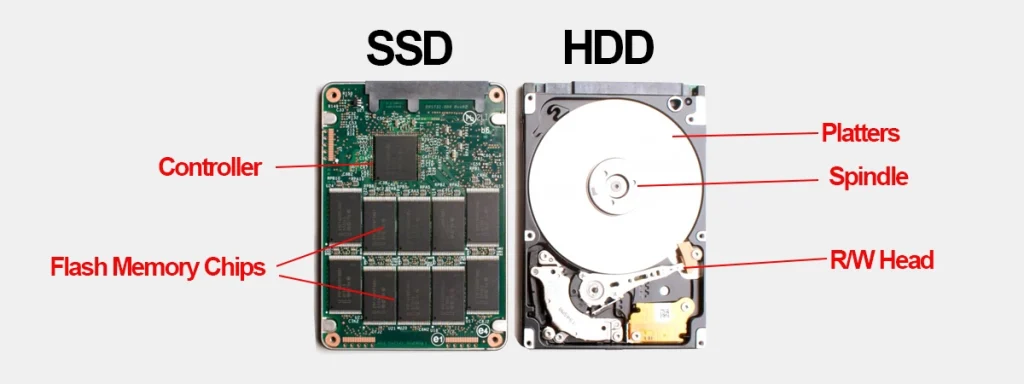
No! There’s more to it than that. In addition to better read/write rates and low latencies, resulting in faster loads and smoother processing, the SSD is far superior. Even though hard disk drives are cheaper per GB, they are extremely slow when it comes to everything else except for archival storage, performing 100 times slower than solid-state disks at best. Don’t be tempted by large amounts of HDD storage if you require speed. This does nothing for your database queries that demand instant responses.
Cloud Integration
Turns out, combining local server storage with modern cloud capabilities provides unparalleled flexibility and resilience. It genuinely offers the best of both worlds. Look for solutions like that are designed to connect both systems.
- Drive performance: Select SSD for speed-critical applications.
- Balance budget: Choose HDD for cost-effective, bulk data storage.
- Gain flexibility: Combine local drives with cloud services for adaptability.
High Grade Performance Features
Why compromise on average when you can have excellence? Performance affects everything about your presence online. The difference between success and failure in business is performance. You assume that today’s CPUs are up to speed with normal load. They don’t cope!
CPU and RAM Choice
See. All the processors do not give equal performance. So, you need to be careful with the selection. When we pair fast processors with adequate memory, we get better performance. We always get about 25 percent improvement when we tune up the CPU and memory. But this will not work if the program itself is inefficiently designed.
Network Capacity
And here’s something no one has told you: The best server out there is rendered useless by lack of network bandwidth. Your speed in transferring data greatly influences how efficiently your operation runs. To have an excellent server, it must have dedicated network bandwidth, because otherwise you’ll be bottlenecked when things get busy.
- Boost processing: Select high-performance CPUs for complex tasks.
- Eliminate slowdowns: Provision ample RAM to reduce latency during heavy usage.
- Ensure speed: Demand high bandwidth for uninterrupted data flow.
Storage Solutions for New Zealand Servers
Server storage is not just about capacity, but also the foundation of performance. Neglecting the requirements of your data may seriously slow down your server’s performance, even when you don’t know there’s something wrong. You may assume that all fast drives work well. They do not. The good news is that there are several choices for storage solutions to choose from.
HDD vs SSD
HDDs are cost-effective and efficient when used for bulk and archiving purposes. However, there’s one thing that is not mentioned about them, which is the fact that they are much slower, with a maximum speed of 150-200 MB/s only. On the other hand, SSDs offer a substantial improvement on access speeds and reliability, but their costs are relatively higher. You’d better not use HDDs for mission-critical databases.
NVMe: The Future
Well, when it comes to speed without any adulteration, there is nothing that can touch NVMe SSDs. They offer incredible speeds, reaching up to 7,000 MB/s, which makes them an ideal solution when you need fast data access. But remember, you won’t get anywhere if your app doesn’t support the number of IOPS needed.
- Pick HDDs: For bulk archives, were cost matters most.
- Select SSDs: For faster operations, better overall reliability.
- Go NVMe: For extreme speeds, critical for intense workloads.
High-Performance Servers Explained
Don’t buy into the “high performance” myth until you know what’s really powering that system. Just because the server is fast doesn’t necessarily make it the right solution to your problem; there is an ideal balance between speed, strength, and stability. I used to think the more cores the better. Not necessarily.
CPU: The Heart of Performance
See, when choosing an excellent server, you need to have a good processor with sufficient cores that would help execute your applications. The general rule is that the greater the number of cores say, 16 or 32 the faster they would work with your application. Be wary of servers with fast clocks but limited cores.
RAM: The Unsung Hero
In truth, having enough RAM is just as essential for making your computer faster as having a good CPU is. RAM helps you perform multiple tasks at once while accessing data at super speeds. Try running ten programs at once on just 4GB of RAM, and you’ll be disappointed with the results. However, it won’t solve problems related to memory leaks.
Network Speed
A typical gigabit network may suffice for some, but when it comes to any process requiring significant amounts of data transmission, only networks capable of running at 10Gbps or 25Gbps speeds are acceptable. Here’s something that no one mentions: No matter how fast your server is, its performance will suffer because of an overloaded connection.These essential parts work together to create a system that can easily manage complex processes.
- Boost CPU: For better handling of simultaneous processes.
- Expand RAM: For superior multitasking, quicker data access.
- Upgrade Network: For swift data movement, crucial for heavy traffic.
Advanced Management Features
Assuming that server management was an option would be very wrong. This isn’t some unnecessary luxury; this is what will keep your servers up and running flawlessly. Good management software will ensure you have no problems at all. At least, I thought manually checking everything was enough.
Automation Tools
It turns out that manual procedures are an invitation to problems. Automation reduces the incidence of human errors by at least 70%, while making all procedures incredibly fast. Automation tools such as Ansible and Puppet can do these jobs for you efficiently.
Monitoring Systems
Pause. What signs show that a system may fail? The constant monitoring of systems is vital for detecting potential problems and preventing failures. Applications like Nagios or Zabbix allow you to set up an immediate alarm if there are any problems, but only if you configure them correctly.
Security Features
What they never tell you is that the server is a target. A server that has adequate security doesn’t just provide peace of mind but is literally a means of survival in a world full of threats. The use of robust firewalls and intrusion detection systems becomes crucial in keeping data safe from the dangers out there. Never make the mistake of being lax when it comes to security. Effective management serves as the backbone of servers.
- Implement Automation: Slash human error, boost operational speed.
- Start Monitoring: Spot issues early, keep services online.
- Bolster Security: Shield data, fend off digital attacks.
Frequently Asked Questions